Organic Mattresses · A practical guide
Before You Choose an Organic Mattress: Questions About Materials, Fit, and Care
An organic label may catch the eye, but a mattress is more than its headline claim. The thoughtful choice begins beneath the cover: with the layers, their origins, the standards that verify them, and the way the bed will feel in your actual bedroom. Ask the right questions before you buy, and the search becomes less about marketing language and more about a sleep surface that suits your body, your values, and your home.
Organic mattresses sit at the intersection of comfort and conscientious design. They may use materials such as organic cotton, wool, latex, and steel coils, while seeking to limit certain synthetic materials or chemical treatments. But “organic” is not a single recipe, and it does not automatically mean every component in a mattress is organic. Products differ in construction, certification, firmness, price, and care. A closer look helps separate specific, verifiable information from broad promises.
Whether you are replacing a well-worn bed, furnishing a new home, or exploring the Organic Mattresses category for the first time, use the questions below as a considered checklist. The goal is not to find a mythical mattress that is perfect in every respect. It is to understand what you are buying—and whether it is a practical match for how you sleep.
1. What does “organic” mean in this particular mattress?
Start by asking for a layer-by-layer material description. A mattress may have a cotton cover, a wool fire barrier, latex comfort layers, and a coil support unit. Each has a different function, and each may have a different sourcing story. Look for clear details about the cover fabric, filling, comfort layers, support core, adhesives, and any treatments or finishes.
The word “organic” can describe a particular fiber or ingredient, rather than the entire finished product. For instance, an organic cotton cover does not, on its own, tell you what is inside the mattress. Likewise, natural latex and organic latex are not interchangeable terms: “natural” generally refers to a material’s source, while an organic claim should be supported by relevant documentation. When descriptions use terms such as “eco,” “clean,” or “natural,” ask what those words mean in measurable material terms.
Useful questions include:
- What materials are used in each layer, from the sleeping surface to the support base?
- Which components are certified organic, and which are not?
- Are there adhesives, flame barriers, dyes, or finishes? If so, what are they?
- Can the company provide a material list or explain how it substantiates its claims?
Transparent answers are more valuable than a long list of appealing adjectives. A reputable seller should be able to distinguish what is known about a component from what is simply not part of the product specification. If information is unclear, treat that uncertainty as part of your comparison rather than filling in the blanks with assumptions.
2. Which certifications apply—and what do they cover?
Certifications can make complex material claims easier to assess, but the name of a standard is only the beginning. Ask which organization issued the certification, which product or component it applies to, and whether the certification is current. A seal on a website or product page should be traceable to the item you are considering—not merely to a supplier, a fabric, or another product in the same collection.
GOTS, the Global Organic Textile Standard, is a textile-processing standard that addresses organic fibers and criteria across parts of the supply chain. GOLS, the Global Organic Latex Standard, is associated with organic latex. OEKO-TEX Standard 100 concerns testing textile products for certain harmful substances; it is not the same as an organic certification. CertiPUR-US applies to specified flexible polyurethane foam, not to an entire mattress and not as a certification that a product is organic. The details matter because each standard answers a different question.
A certification does not guarantee that a mattress will be comfortable, last a particular number of years, or suit every person. Nor should one seal be treated as a universal verdict on every environmental or health consideration. Think of standards as evidence with a defined scope. Read the accompanying explanation, confirm which parts are covered, and compare like with like.
It can also help to ask whether a company publishes its standards and testing information in plain language. Specific documentation is preferable to vague assurances such as “chemical-free.” That phrase is often too broad to be meaningful: materials are made of chemicals, including natural materials. More useful questions identify a particular substance, treatment, test, or standard.
3. How do the materials affect feel and temperature?
Material choices influence more than a product’s environmental profile. They shape the way a mattress responds when you lie down, how easily it springs back, how much it contours, and how the surface manages warmth and moisture. These qualities are personal. A material celebrated in one review may feel too yielding, too buoyant, or too warm to someone else.
Latex is often described as responsive and resilient, with a buoyant feel that differs from the slower contouring associated with many memory foams. Wool can be used as a cushioning or regulating layer, and cotton commonly appears in covers and padding. Pocketed coils can add lift and support, while the precise feel depends on their design and the layers above them. None of these material names alone predicts the finished mattress: thickness, density, construction, and the combination of layers all contribute.
If you tend to sleep warm, look beyond general claims about breathability. Ask what is directly against the body, whether the mattress includes substantial foam layers, and how the construction is designed to allow air movement. Your sheets, mattress protector, room temperature, and bedding layers also affect comfort. A mattress cannot control every part of the sleep environment, but understanding its construction gives you a more realistic basis for comparison.
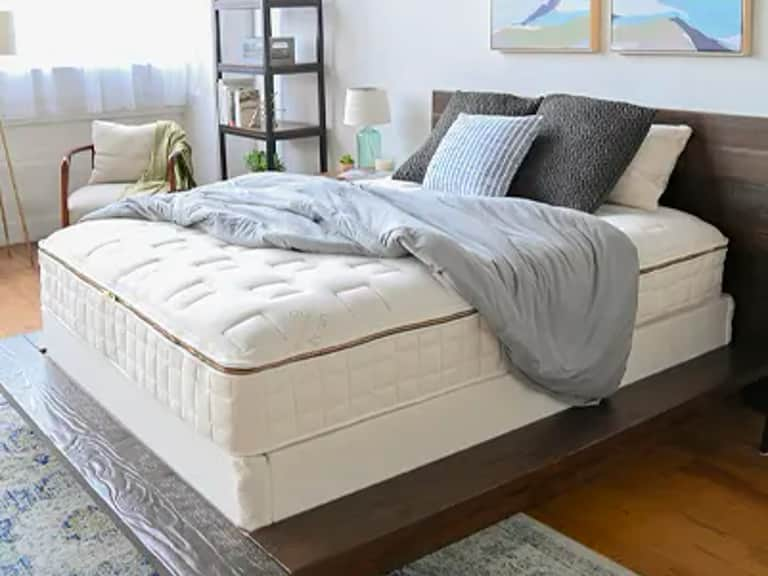
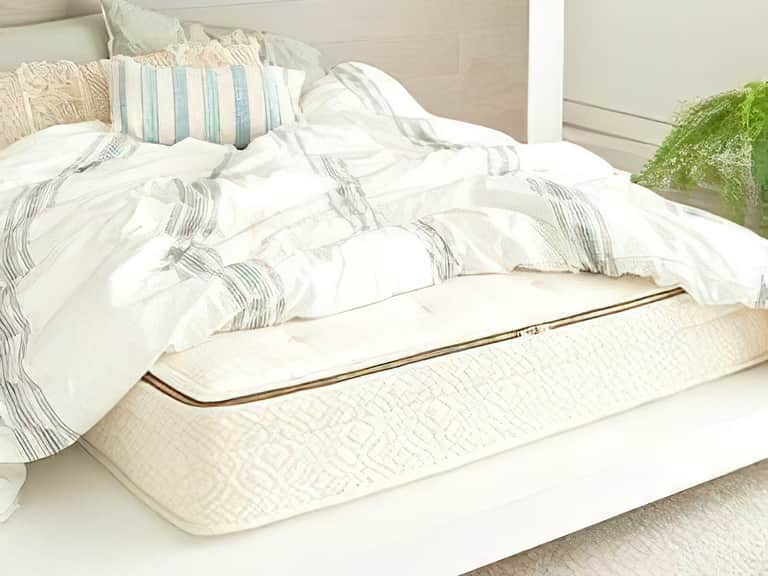
For shoppers who want to explore a customizable organic design, the Naturepedic EOS Classic Mattress is described as a layered mattress with organic Dunlop latex comfort and support components, organic fabrics, and pocketed springs. Its zippered construction is intended to let purchasers adjust layer configurations, subject to the seller’s terms. Check the current product specification and availability directly, and compare its feel and policies with other mattresses rather than treating any one construction as universally suitable.
4. What firmness and support fit your sleep habits?
Firmness labels are useful shorthand, not a universal scale. One brand’s “medium” may feel different from another’s, and a mattress can feel firmer or softer depending on body shape, weight, sleep position, and the bed base beneath it. Instead of choosing by adjective alone, consider what you need the surface to do.
- Side sleepers often look for enough cushioning at the shoulder and hip while still feeling supported through the middle of the body.
- Back sleepers may prefer a balanced surface that supports the lower back without feeling rigid or allowing excessive sink.
- Stomach sleepers commonly consider a firmer feel to reduce the sensation of the pelvis sinking too far, though individual needs vary.
- Combination sleepers may value responsiveness that makes it easier to change positions during the night.
These are starting points rather than medical advice or guarantees. If you share a bed, consider both sleepers’ preferences and whether the mattress can accommodate different comfort needs on each side. Ask whether the firmness is adjustable, whether layers can be rearranged, and what any adjustment costs. Also consider your pillow: loft and firmness influence neck position, and a new mattress can change how your usual pillow feels.
Whenever possible, test the mattress under realistic conditions. A brief showroom visit can reveal immediate impressions, but it cannot fully predict overnight comfort. A home trial may offer a more useful assessment, provided you understand its duration, return conditions, fees, and required packaging or collection arrangements.
5. Will it fit the room, frame, and people using it?
Before falling for a specification, measure the bed frame, room, and access route. Confirm the mattress dimensions, finished height, and depth. Check whether the frame or foundation meets the manufacturer’s support requirements; an unsuitable base can affect both comfort and warranty coverage. If you use an adjustable bed, verify compatibility rather than assuming that a flexible-looking construction will work with it.
Consider the complete setup, not only the mattress. A thick mattress may require deeper sheets and a protector with suitable pockets. A higher bed can make getting in and out easier for some people, but may be inconvenient for others. In a smaller bedroom, the mattress’s dimensions and delivery packaging can affect whether it can be maneuvered around stairs, narrow hallways, or tight turns.
For couples, ask about motion transfer and edge support if those are important to your routine. For children or guest rooms, practicalities such as waterproof protection, washable layers, and the manufacturer’s age-specific guidance may matter more than a premium feature. Tailor the questions to the person and space rather than buying for an idealized bedroom.
6. What are the trial, return, and warranty terms?
A mattress is a major household purchase, so the policies deserve the same attention as the materials. A generous-sounding sleep trial may have conditions: a required break-in period, geographic limits, return fees, exchange restrictions, or special handling rules. Ask how a return is initiated and whether the company arranges collection. Confirm these details before ordering, not after the mattress is in your bedroom.
A warranty is not a promise that every comfort change or visible impression will qualify for replacement. Read what is covered, how a defect is measured, what the owner must do to make a claim, and whether the approved foundation is required. Separate normal softening or personal dissatisfaction from structural defects, and ask about prorated coverage or transport costs.
Delivery is another practical part of the experience. Some layered mattresses arrive in several boxes and require light assembly. Ask how much lifting is involved, whether setup is available, and whether old-mattress removal is offered. A product that looks manageable on a product page can be heavy or awkward to assemble, particularly in a compact room or an upper-floor home.
7. How should the mattress be cleaned and maintained?
Care instructions are part of the purchase decision. Ask whether the cover is removable, whether it can be washed, and what to do after a spill. Many mattress covers are not designed for machine washing, even when they look like ordinary fabric. Removing or washing a cover against the manufacturer’s instructions could affect its fit or warranty.
A well-fitting mattress protector can help guard against everyday spills, skin oils, and dust. Choose one that fits the mattress depth and suits your priorities: a simple breathable layer may preserve surface feel, while a waterproof protector can provide additional liquid protection. Check its materials and care label too; a protective layer should not be assumed to have the same certification or construction as the mattress itself.
Follow the maker’s guidance on rotating or turning the mattress. Some designs are one-sided, while others may allow specific layer adjustments. Avoid improvised cleaning products and excess moisture unless the care instructions permit them. Ventilating the bedroom and keeping bedding clean are sensible habits, but no mattress can eliminate all allergens or guarantee a particular health outcome.
If low-waste living is part of your motivation, consider durability and end-of-life plans alongside the initial material story. Ask whether replacement layers are available, whether components can be repaired or separated, and what local recycling options exist. Availability varies by location and mattress construction, so verify rather than relying on broad claims that a product is recyclable.
8. Is the price aligned with what matters to you?
Organic mattresses span a wide range of prices. Cost can reflect material sourcing, manufacturing, complexity, adjustability, and brand positioning, but price by itself does not prove quality, sustainability, or suitability. Decide which features are essential before comparing models: perhaps verified material claims, a particular firmness, replaceable layers, or a clear return policy.
Compare the full ownership picture. Include a compatible foundation, protector, delivery, setup, and any future layer exchange in your budget. A customizable mattress may offer a way to alter the feel, but only if the process, fees, and available parts make sense for you. A simpler design may be the more practical choice if it meets your needs without additions you do not intend to use.
Be wary of urgency that crowds out due diligence. Promotional pricing changes; material facts, dimensions, and policy terms should remain clear. Save the product specification and the relevant policy pages at the time of purchase, especially if a trial or adjustment option is important to your decision.
A concise checklist before checkout
A considered purchase does not require mastering every textile standard or manufacturing process. It does require enough information to understand the mattress in front of you. Before placing an order, make sure you can answer these questions:
- Do I know what each major layer is made from?
- Can I verify which materials or finished products are certified, and what each certification covers?
- Does the firmness and construction make sense for my sleep position and personal comfort preferences?
- Will the size, height, and support requirements work with my room and bed frame?
- Have I read the trial, return, delivery, and warranty terms?
- Do I understand the care instructions and whether I need a separate protector?
- Does the price reflect features I genuinely value?
The most useful question is the specific one
An organic mattress can be a meaningful choice for shoppers who care about fiber sourcing, material disclosure, or the composition of their sleep space. But the label is an invitation to investigate, not a substitute for investigation. Ask what is in the mattress, what the certificates actually verify, how the construction will feel, and what ownership requires once the bed arrives.
That kind of attention is less glamorous than a perfect product promise, and much more useful. When materials, fit, comfort, and care are considered together, you can compare Organic Mattresses on their real merits—and choose a bed that feels considered long after the first night.